
Thursday 18th July 2024
Being an old biker I can’t get enough of two wheels so I took the bike on my own for a ride around the south part of Skyros.
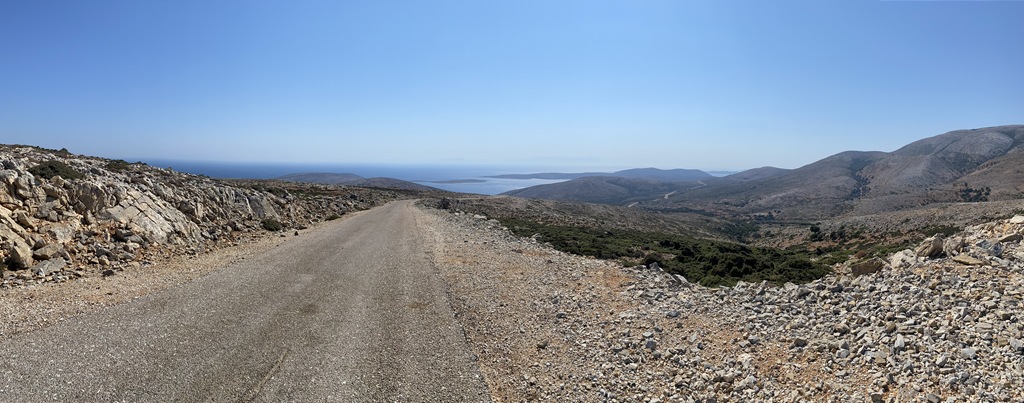
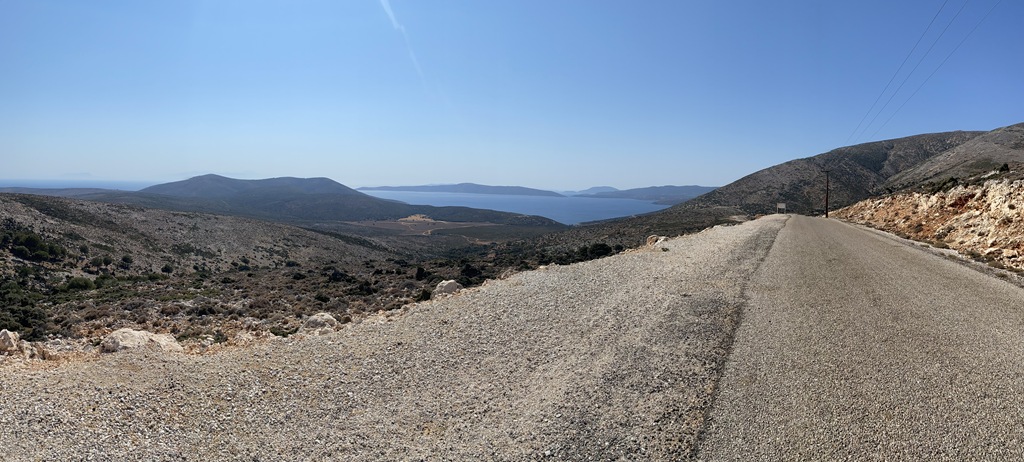
What a difference – mostly treeless & far more rock with a desolateness that I quite like. I have tried some panoramic shots to try to give the atmosphere
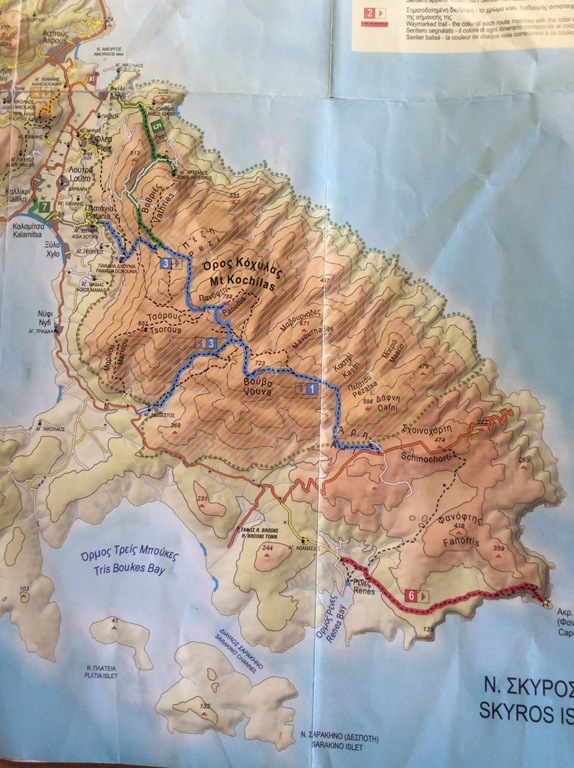
There is in effect only one road suitable for the scooter though there are routes up into Mount Kochilas in the centre. I don’t know what I would’ve done if I had had a puncture!
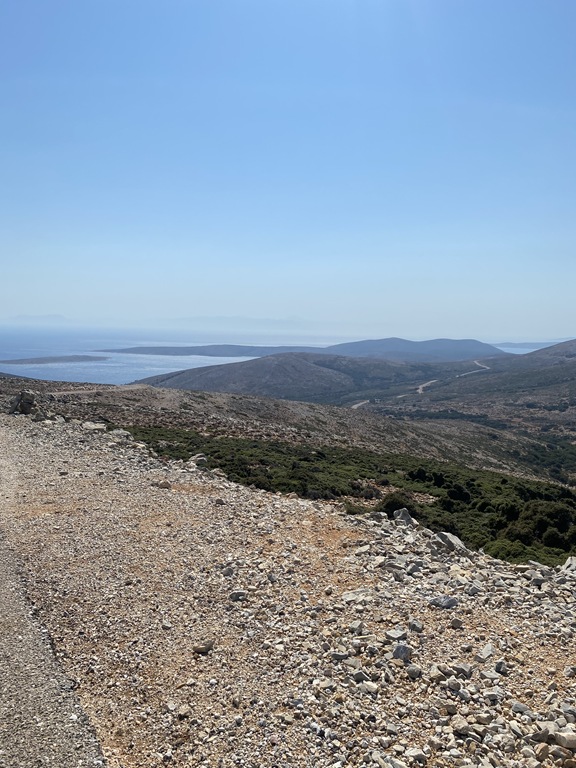
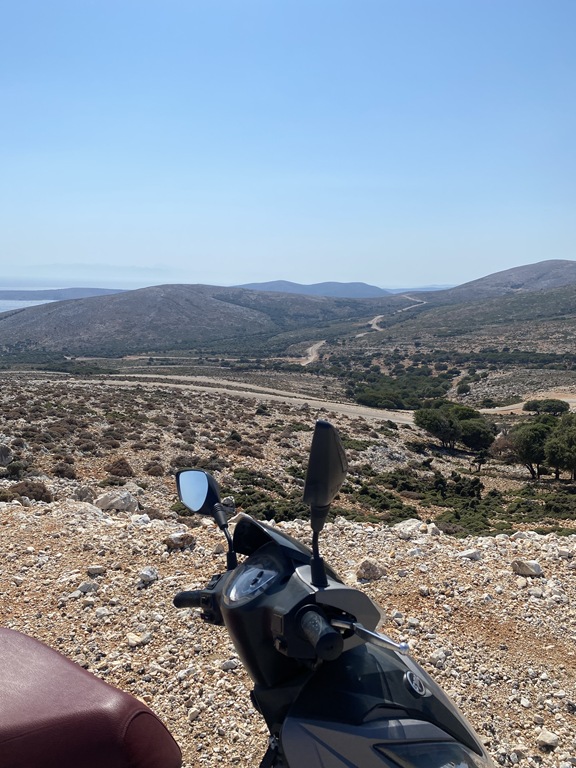
I followed the road right over to the other side of the island at the brilliantly named Schinochorti before returning the same way but turning off to see Rupert Brookes’ Tomb.
It sits alone in a wild, remote place and evokes quite melancholic feelings.
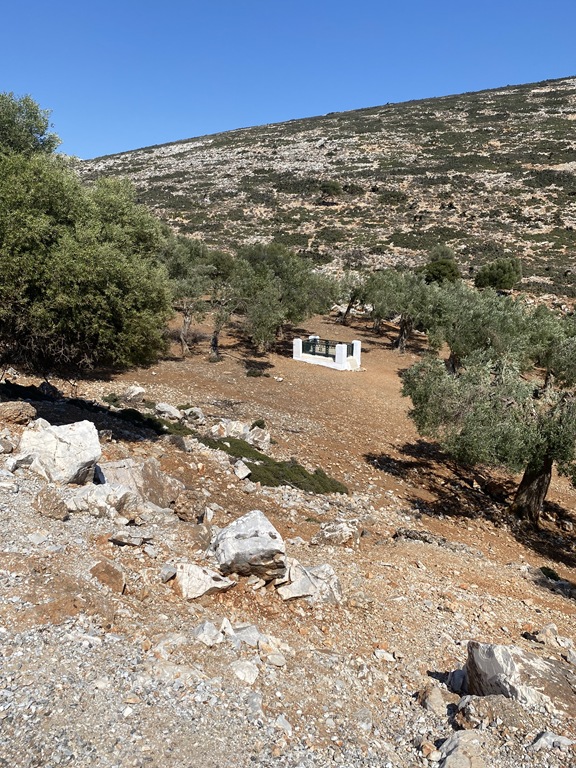
Rupert Brooke (1887–1915) was an English poet best known for his idealistic war sonnets written during the early stages of World War I, especially “The Soldier”
that begins:
“If I should die, think only this of me:
That there’s some corner of a foreign field
That is forever England.”
Ironically, Brooke never saw battle. In 1915, while en route to the Gallipoli campaign with the British Mediterranean Expeditionary Force, he developed septicaemia from an infected mosquito bite. He died on April 23, 1915, aboard a French hospital ship anchored off the Greek island of Skyros.
Because of the urgency and difficulty of wartime logistics, Brooke was buried hastily but reverently in an olive grove in the hills of Skyros, far from the battlefield and his home. His grave sits in a remote and peaceful spot in the Tris Boukes Bay area, surrounded by wild herbs and nature—echoing the bucolic peace often found in his poetry.
The Poet’s Tomb on Skyros has become a symbol of the romanticism of wartime sacrifice, despite the brutal reality that followed in Gallipoli and beyond. Brooke’s early death enshrined him as a tragic figure of promise unfulfilled—his grave a quiet sentinel overlooking the Aegean, far from the carnage that claimed so many of his generation.
His resting place is now part of pilgrimages made by literary admirers and historians, and it stands as one of the most touching war memorials in the world – not for its grandeur, but for its serenity and isolation.

